
Narrative Control, Counter Cinema, and Everything in Between

As the world faces a multitude of crises, we cannot look away. This week, we’re bringing you new pieces from across the world, as we usually do. We have stories from the rubble of demolished homes in India to the burning forests of Kenya, from the movie screens of the Philippines to war-struck Tehran.
Power has always depended on controlling the story: who tells it, how it’s named, and who gets written out of it entirely. A home becomes an “illegal structure.” A forest becomes a carbon credit. A region becomes an orientalist fantasy. An indigenous community becomes a conservation threat. The language shifts, but the logic is the same: it is to make the violence look like procedure, dispossession look like governance, and victims look like they had it coming.
Our writers reject that very logic through investigation, criticism, and reportage that pays attention to the people most at risk of being disappeared from the headlines, official records, and their own homes.
We are soon publishing an exciting investigative report on India’s aspirations of becoming a major arms supplier, how Israel plays a part in it, and what the consequences of the resulting hypermilitarization are. More at the end. Keep reading:
The Bulldozer Arrives Twice: First in Language, Then in Concrete Terms
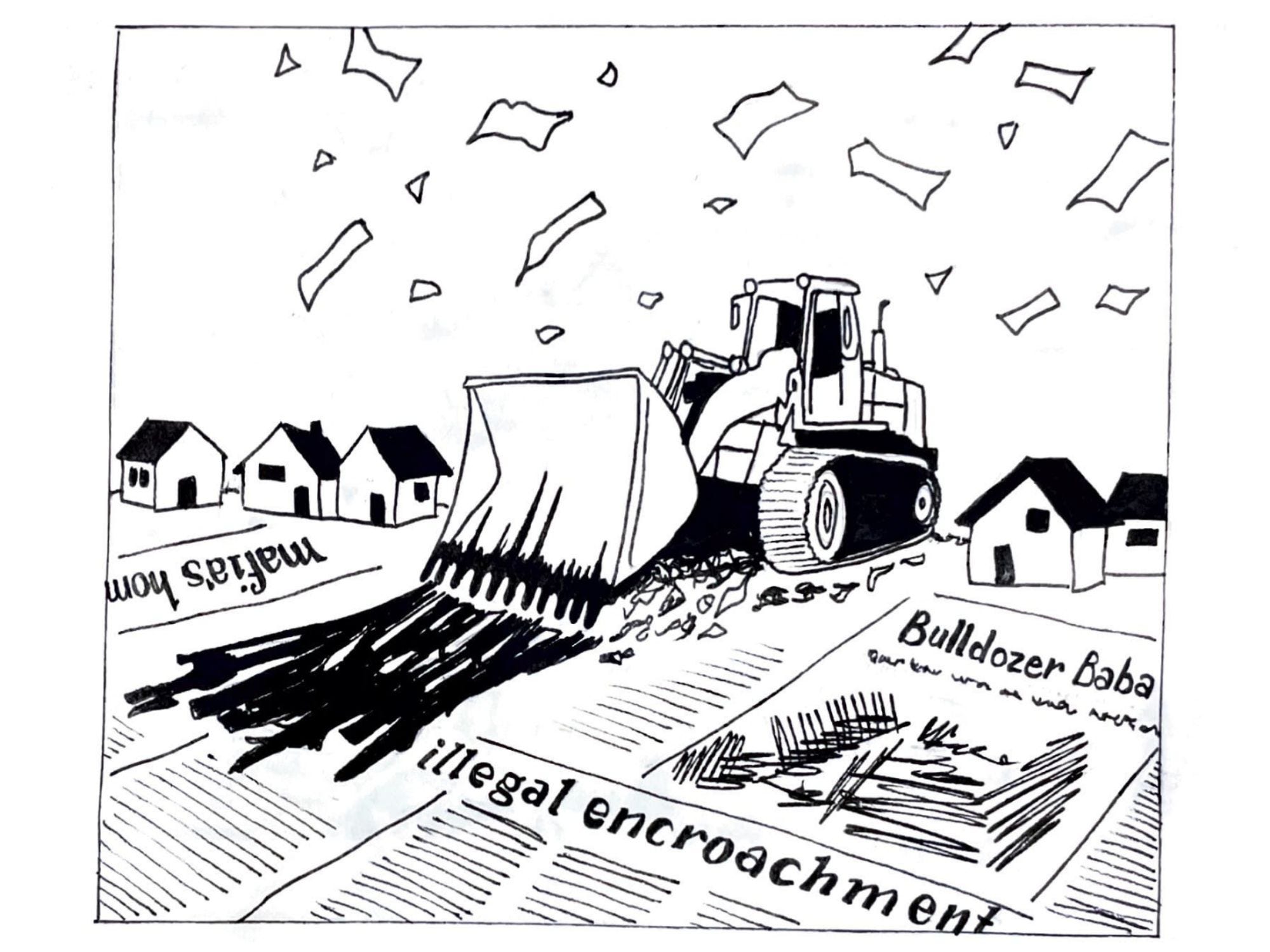
Before a home is demolished in India, it is first demolished through language.
It becomes an “illegal structure.” Its residents become “encroachers,” “rioters,” “masterminds.” The bulldozer that tears it down is described as if it were an autonomous machine, not a state instrument with a chain of command and political will behind it.
This is the argument at the heart of a new essay from our Demolitions Project researcher Afreen Fatima: that mainstream Indian media has developed a grammar of demolition, a set of linguistic habits so consistent and so normalized that they make punitive state violence appear procedural, and even righteous.
Fatima knows this terrain personally. Her own home in Allahabad was demolished in 2022, in the wake of a protest, one of the cases her three-part series documents. Writing from that position, she moves between linguistic analysis, field notes, and her lived account. The piece maps how the destruction of homes as punishment, often targeting Muslim communities, is represented in the media as routine governance.
The author examines headlines from national dailies, showing how each one drops qualifiers (”alleged,” “accused”) that journalistic language requires. The result is a forensic account of how language makes violence legible and acceptable.
This is the second of her three-part series on how she shaped The Demolitions Project while navigating the personal and the political. Read the first essay here.
Read the full essay here.
A Filipino Director Turns the Colonial Gaze Inside Out

Every film has a point of view. The question Filipino director Lav Diaz asks in his new film Magellan is: whose?
The movie follows Ferdinand Magellan, the Portuguese explorer who “discovered” the Philippines in 1521, played by Mexican actor Gael Garcia Bernal. But this is not a prestige drama about the heroism of conquest. From its very first image, an indigenous Malay woman is mid-ritual when European soldiers appear on the horizon, and Diaz frames it so that we, the audience, are watching her through the tall grass. The camera does not observe the colonization. It participates in it.
In a new interview, Diaz reflects on cinema’s entanglement with the colonial project it so often depicts and how Magellan uses that entanglement to gradually shift allegiance, from the explorer to his enslaved indigenous companion Enrique de Malaca, whose voiceover eventually takes over the film entirely. For Diaz, it’s an act of reclaiming history and the colonial gaze itself.
Keep reading here.
Auto Queens: Circles of Labor, Form, and Survival
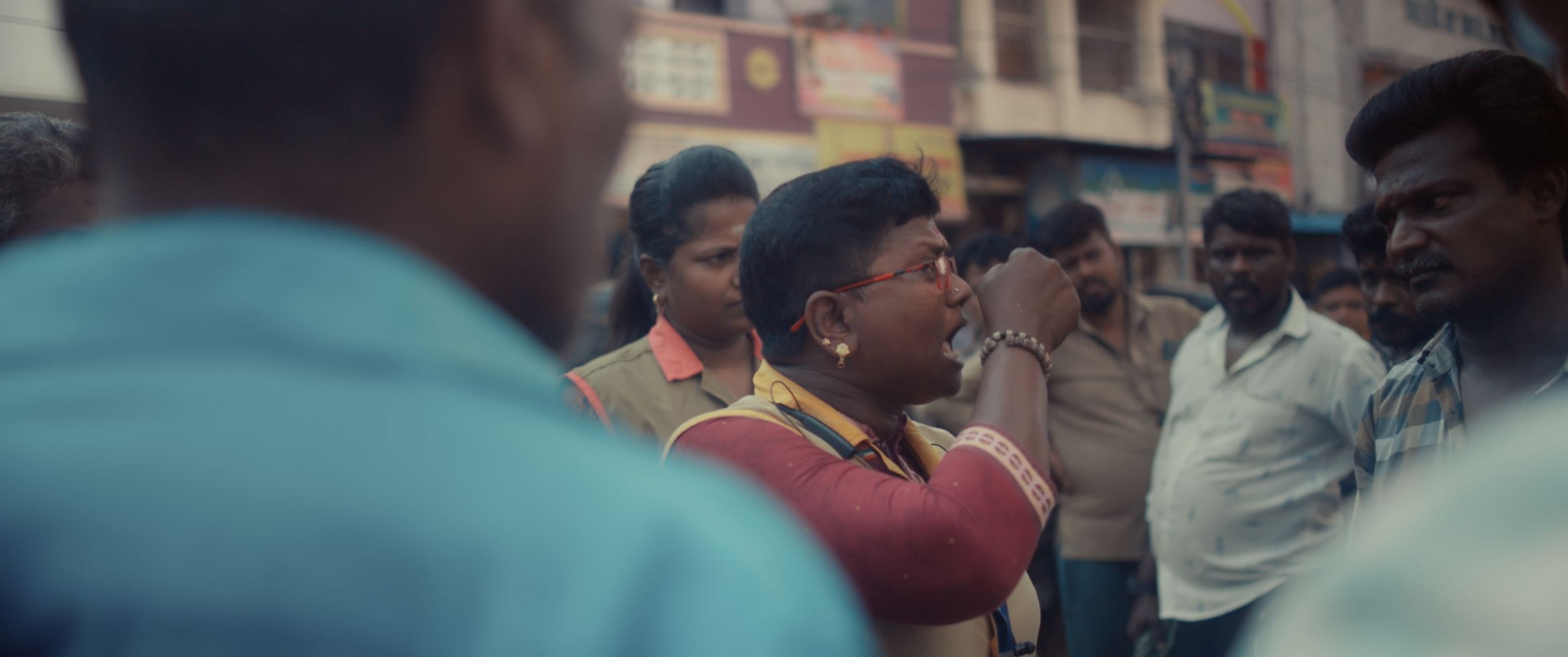
In Madras, women’s work is framed in one of two ways: as empowerment or as anomaly. Auto Queens, a 30-minute Tamil documentary by Sraiyanti Haricharan, refuses both. Instead, it follows Leela Rani and Mohanasundari, two women auto-rickshaw drivers who built India’s first women’s auto-drivers’ cooperative, and treats their labor not as inspiration, but as politics.
The film centers on their friendship as much as their organizing. They arrive at work together, argue and laugh in the same breath, and feed each other fish. It is from within that texture of everyday survival that the Veera Pengal Munnetra Sangam Courageous Women’s Union for Emancipation was built, slowly, over six years, against a city that offered them neither safety nor space.
Written by Aabha Muralidharan, this new piece traces the film’s making, its formal choices, and the union’s broader vision, including a proposal for a worker-owned ride-hailing app that took first prize at the 2024 Global Cooperative Summit. Auto Queens has its US premiere at the True/False Film Festival this month.
Read the full essay here.
Koozhangal: A Meditation on Masculinity, Endurance, and Caste
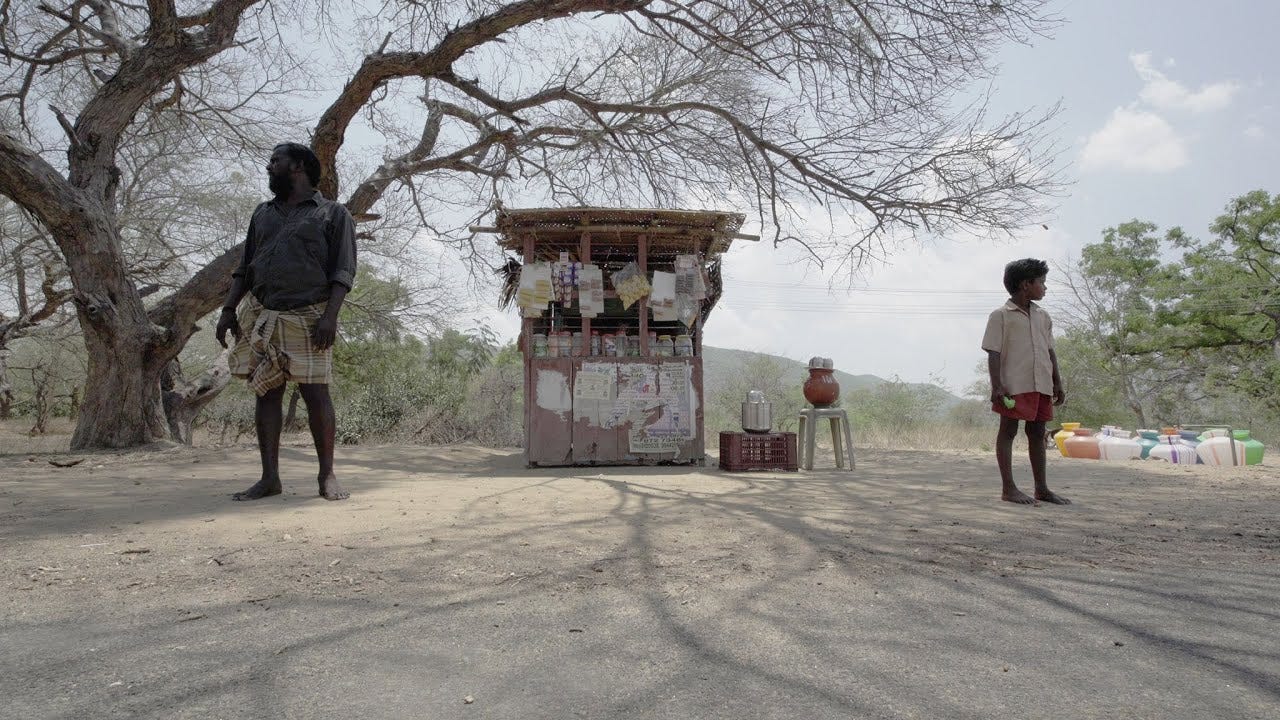
Also this week, Naitri Derasari writes on Koozhangal (Pebbles, 2021). Not only is it India’s official Oscar entry, but it is also one of the most quietly devastating Tamil films in recent times. It follows an alcoholic, abusive father and his silent young son walking across the arid interior of Tamil Nadu to retrieve a wife and mother who has fled. It is not a rescue story. It is an anatomy of how violence is inherited, how drought becomes domestic tension, caste becomes compensatory rage, and a child absorbs what no one ever names.
The numbers are not incidental: over 30% of households in Tamil Nadu’s interior districts lack direct access to clean drinking water, and nearly 1 in 3 women in rural India have experienced domestic violence. Koozhangal is a cinematic embodiment of these statistics, with scenes that mirror the claustrophobic tension of an ambient, omnipresent patriarchy. There is no score, no catharsis, no savior. Just the weight of what is witnessed, and a boy who collects pebbles, each one carrying a fragment of unspoken hurt.
Keep reading here.
Gulf: A Dangerous, Orientalist Portrait of Monstrous Arabs and Oppressed Victims

Writer Zoe Patterson lived in the United Arab Emirates for 11 years. Since moving to New York, the question she gets asked most often is: “What was that like?” as though it were an ordeal she survived. The second most common question, usually from men: “How was it to be there… as a woman?” When she says she feels much less safe in North America, the conversation quickly changes subject.
That personal context frames her sharp, wide-ranging review of Gulf, Mo Ogrodnik’s 2025 novel about five women across Saudi Arabia, the UAE, Syria, the Philippines, and Ethiopia. Ogrodnik lived and taught in the Gulf, which should have given her the grounding to write about it with nuance. Instead, Patterson argues, the novel flattens the region into a familiar orientalist portrait: bleak, empty, threatening, populated by monstrous Arabs and passive victims, while New York blooms with life and liberal virtue.
Patterson reviews the novel’s factual errors, its implausible dialogue, its deployment of a Syrian ISIS storyline to cast a shadow of terrorism over Abu Dhabi, and its treatment of migrant workers as props for the Western conscience. But it is also something more: a demand for Gulf literature that can hold complexity, contradiction, and the agency of people who are already representing themselves in a more nuanced way.
Read the full review here.
When “Conservation” is the Weapon
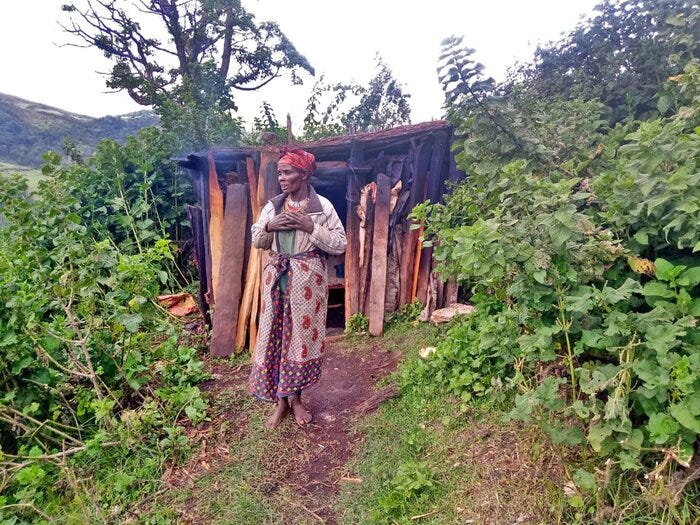
In the early morning of May 14, 2024, armed rangers arrived at Kenya’s Embobut Forest and burned approximately 600 homes belonging to the indigenous Sengwer community. They were enforcing it under a program funded by the European Union and the World Bank.
This is the opening of a new investigation by Ahmadu Abubakar Ndakogarba, tracing what he calls “green carcerality” across Kenya, Colombia, and Indonesia. There emerges a pattern in which environmental laws, carbon markets, and conservation financing are used to criminalize indigenous land defenders, burn their homes, and charge their acts of resistance as organized crime or terrorism. The architecture is consistent across all three cases.
The piece explores how climate finance shields itself from accountability, how funders outsource the proof of compliance to the very agencies conducting the evictions, and what indigenous communities are doing in response, including building their own counter-forensic archives to assert sovereignty through data. As the Sengwer Council of Elders put it the day before their homes were burned: “We are neither squatters nor encroachers nor internally displaced persons, but the aborigines, the indigenous peoples, the natives of Embobut forest.”
Read the full story here.
Living in Tehran under Bombs
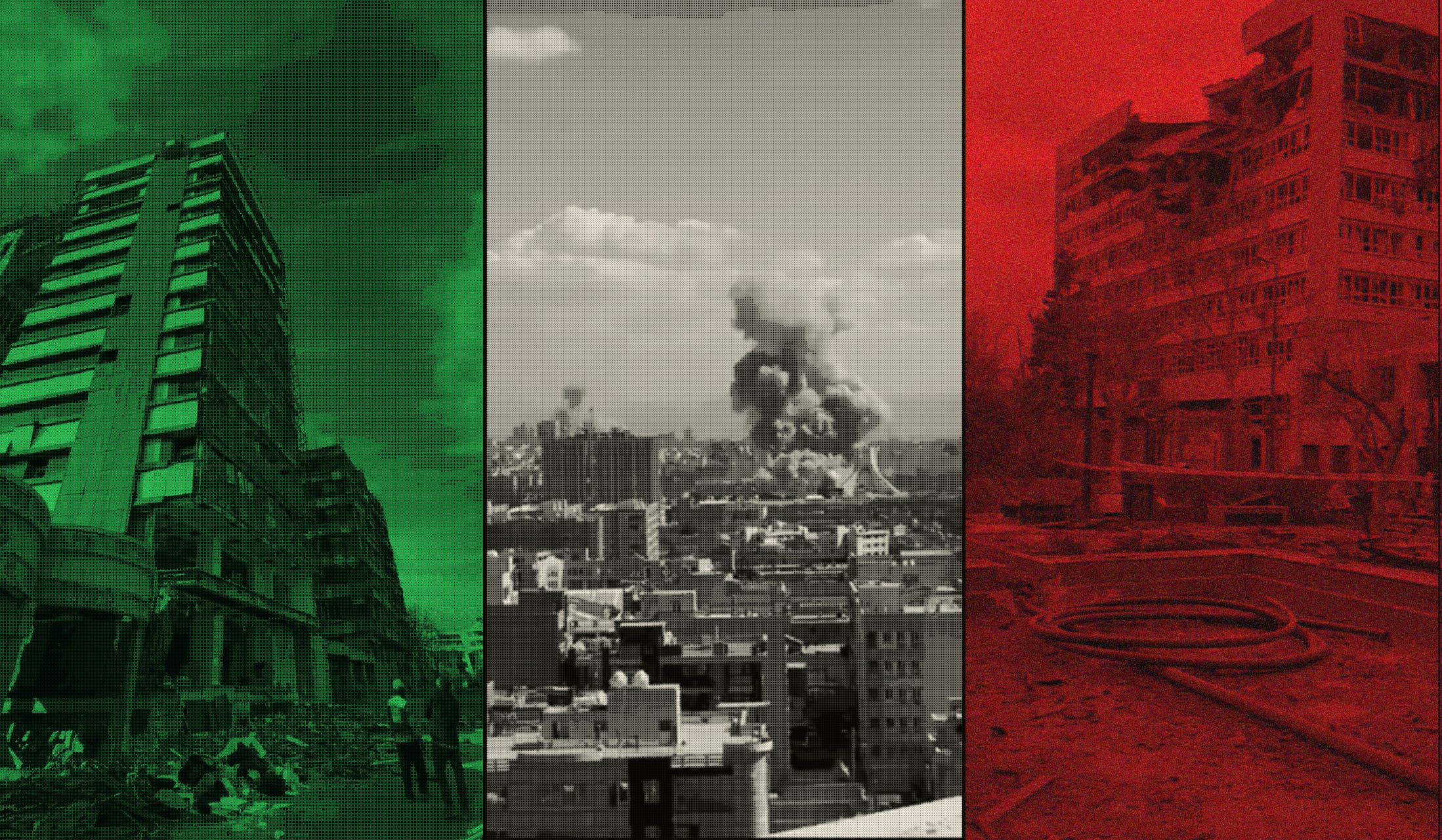
Peiman Salehi is an independent journalist based in Tehran. He filed a dispatch through brief VPN connections, as Iran’s internet has been blocked since the war began at the end of February. His house was damaged, and his laptop was destroyed in a nearby strike. Western corporate media have largely abdicated their duty to cover this war truthfully, treating it as inevitable, reducing Iranian civilian life to debate panels, state briefings, and bomb-damage assessments.
This dispatch refuses that reduction. Salehi writes from inside a city under bombardment where more than 1,300 civilians have been killed, nearly 8,000 residential homes and other public spaces destroyed, and families are preparing for Nowruz, the Persian New Year, amid the sound of fighter jets overhead. He gives us a glimpse into what life in Tehran looks like right now and writes about national identity, historical memory, and the exhaustion of people who have been tired for a very long time.
We are publishing this because critical eyewitness testimony from inside Iran is exceptionally rare right now. And because what is being flattened into briefings deserves to be heard in full.
Keep reading Salehi’s essay here.
Coming Later This Week
India is building a weapons economy, and almost no one is talking about it. After IT and pharma, the Modi government has bet big on weapons manufacturing as the country’s next economic engine, throwing open the sector to private players and pushing foreign arms giants to make their products in India. But the ambition is colliding with hard realities: a glut of assemblers chasing limited orders, military-grade weapons trickling down to police forces, and grave consequences of hypermilitarization on citizens. The report also exposes how this defense push is shaping trade and relations between India and Israel.
“Who Will Buy India’s Weapons?” will be published on The Polis Project later this week. Subscribe to get notified!